
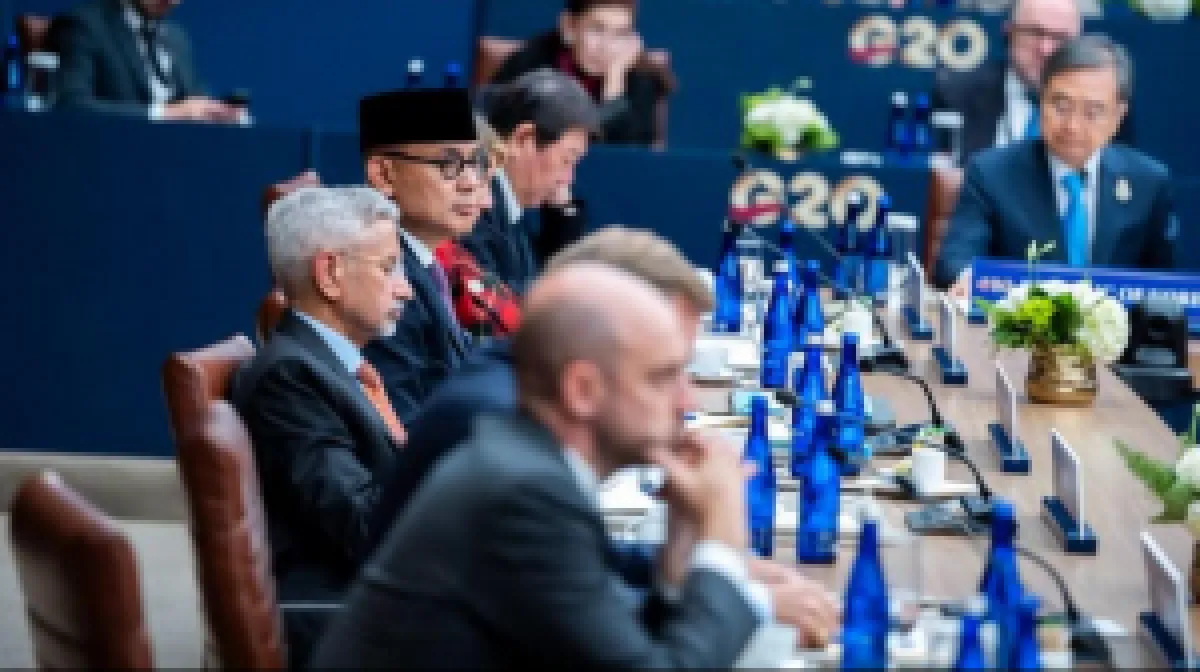
Jakarta: Indonesian Foreign Minister Arrmanatha Nasir attended the G20 Foreign Ministers’ Meeting (FMM) in Atlanta, United States, on October 30–31, 2026, where three plenary sessions addressed geopolitical tensions, energy security and global supply chains.
During the discussions, Arrmanatha, commonly known as Tata, stressed that national, regional and global resilience are interconnected and require effective multilateral cooperation.
"National resilience strengthens regional resilience, which in turn strengthens global resilience," was Indonesia’s main message at the meeting.
Tata also emphasized the need to reform the multilateral system to make it more trusted, representative and responsive to contemporary challenges.
"Food must not be used as a weapon," he said in a statement published on the Indonesian Foreign Ministry’s website on Sunday, November 1, 2026.
He highlighted the impact of conflicts around the Strait of Hormuz, the Black Sea and the Red Sea on global trade routes and supplies of energy, fertilizers and food, particularly for developing countries.
Indonesia called for de-escalation, dialogue and stronger international cooperation to address these challenges.
Tata also stressed the importance of respecting the 1982 United Nations Convention on the Law of the Sea (UNCLOS) as the international legal framework governing maritime activities and protecting freedom of navigation.
Indonesia introduced the concept of Responsible Freedom of Navigation, which emphasizes that freedom of navigation must go hand in hand with responsibility, while the exercise of sovereignty must be accompanied by restraint. From Energy to Supply Chains During the energy session, Tata stressed that energy security is an integral part of national security.
Indonesia continues to strengthen its energy independence through initiatives such as the B50 biodiesel program and plans to develop 100 gigawatts (GW) of solar power capacity.
"Crises should speed up the energy transition, not reverse it," he said.
Tata also emphasized the need for a fair and affordable energy transition by expanding access to clean energy technologies and making financing and investment more accessible to developing countries.
In the final plenary session on supply chains, Indonesia highlighted the importance of reliable global supply chains and a stronger multilateral trading system.
Indonesia proposed strengthening preparedness for crises and emergencies, providing affordable long-term financing, and developing technology partnerships to enable developing countries to become technology creators rather than merely users. (Yaumil Tianri Rahmi)
Also read: Indonesian FM Urges G20 to Prevent Maritime Conflicts From Becoming a Global Crisis
Indonesia Calls for Fair Energy Transition and Resilient Global Supply Chains




Komentar (0)